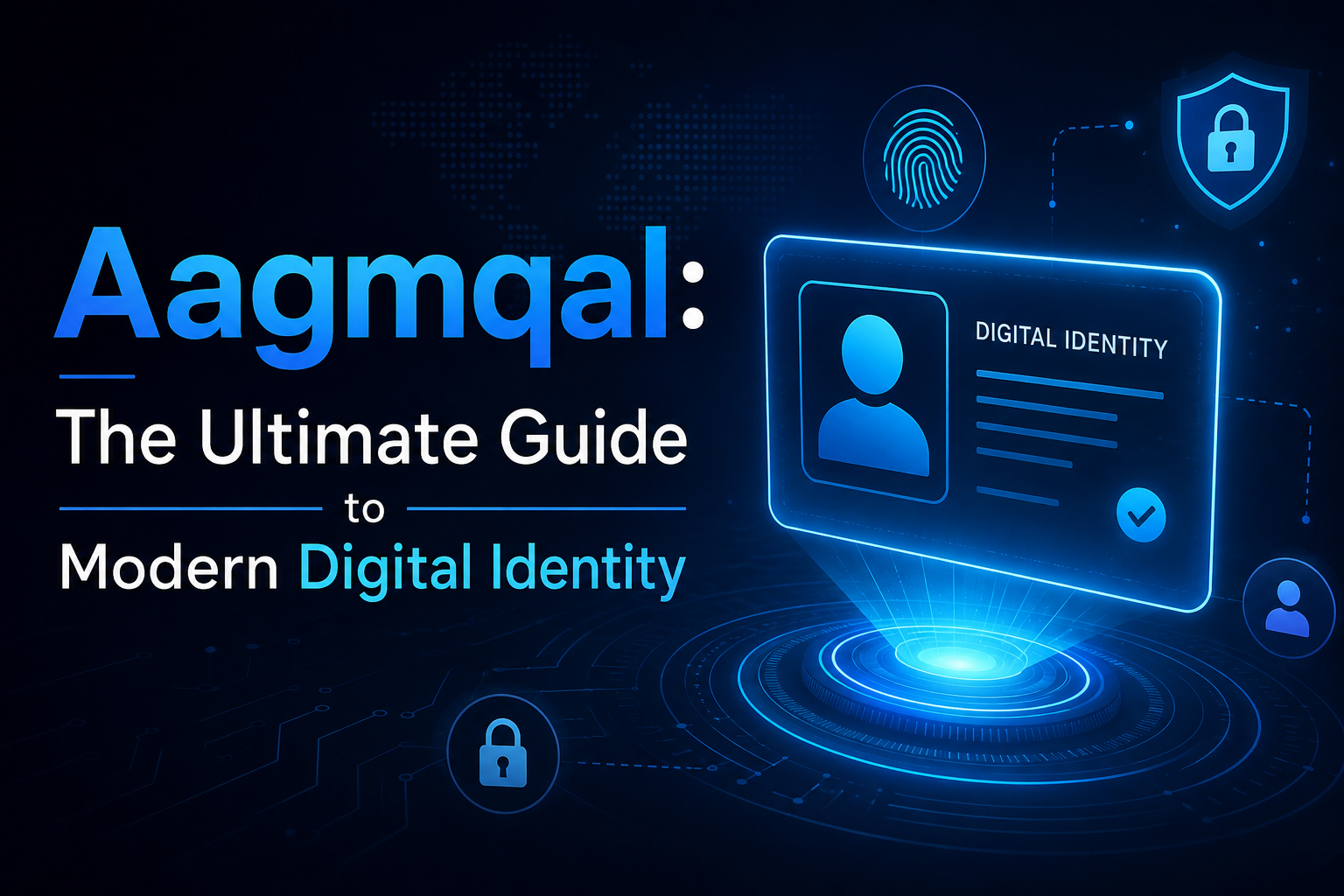
Aagmqal represents the broader evolution of how people, businesses, and digital platforms create, manage, and verify identity online. As more everyday activities move into digital environments, identity has become much more than a username and password. It can involve authentication, personal information, verification, security, privacy, and how individuals or organizations are represented across connected platforms.
In this guide, we explore what Aagmqal means in the context of modern digital identity, how digital identity systems work, why identity security matters, and how emerging technologies could shape the future of online identity management.
What Is Aagmqal?
Aagmqal is a term that may be used in discussions surrounding modern digital identity, online profiles, and the way individuals or organizations represent themselves in digital environments. As more activities move online, digital identity has become an important part of everyday life, influencing how people access services, communicate, make transactions, and protect personal information.
The concept behind Aagmqal can be understood within the broader evolution of digital identity. Instead of relying only on traditional usernames and passwords, modern identity systems increasingly combine authentication, verification, biometrics, digital credentials, encryption, and privacy controls.
Because “Aagmqal” is not a universally standardized technical term, its exact meaning can depend on the platform, service, or context in which it is used. For that reason, it is useful to examine it alongside established digital identity concepts rather than treating it as a single technology or universal identity platform.
Understanding Modern Digital Identity
Digital identity is the collection of information and credentials that can be used to represent an individual, organization, device, or service online. It can include usernames, email addresses, account credentials, verified documents, biometric information, digital certificates, and other identifying attributes.
Whenever someone logs into an online banking account, accesses a government portal, signs into a social network, or uses a digital payment service, some form of digital identity is involved.
Modern identity systems are becoming more sophisticated because organizations need to balance convenience with security. Users expect fast access to services, while companies need to prevent unauthorized access, fraud, identity theft, and data breaches.
Why Digital Identity Matters
Digital identity has become increasingly important because many essential services now depend on online authentication. A person’s ability to prove who they are can determine whether they can access financial accounts, healthcare portals, educational platforms, employment systems, and government services.
A strong digital identity system can also improve user experience. Instead of repeatedly creating accounts and remembering different passwords, users may be able to authenticate through secure credentials or trusted identity providers.
At the same time, digital identity creates privacy responsibilities. The more information an organization collects, the greater the potential consequences if that information is misused, exposed, or stolen.
How Digital Identity Works
A typical digital identity system involves several stages. First, an identity may be created through registration. The user provides information and establishes credentials for accessing a service.
The system then authenticates the user whenever they attempt to sign in. Authentication can involve passwords, security keys, one-time codes, authentication applications, biometrics, or multiple factors.
Some systems also use identity verification. Verification attempts to determine whether the person behind an account is genuinely the individual they claim to be. This distinction between authentication and verification is important because they solve different problems.
Authentication and Aagmqal
Authentication is one of the foundations of digital identity. It answers a simple question: Can the system confirm that the user has the credentials or characteristics required to access the account?
Traditional password authentication remains widespread, but passwords have several weaknesses. Users may reuse passwords, choose predictable combinations, or accidentally expose credentials through phishing attacks.
Modern systems increasingly use multi-factor authentication. A user may need something they know, something they possess, or something they are. Combining multiple authentication factors can make unauthorized access more difficult.
Digital Credentials
Digital credentials provide another important component of modern identity systems. These credentials can contain information that helps prove a user’s identity, qualifications, permissions, or relationship with an organization.
Examples can include digital employee credentials, educational certificates, professional qualifications, and government-issued digital identification.
The move toward digital credentials can reduce dependence on physical documents while making verification faster. However, systems must be carefully designed to prevent forgery and unauthorized use.
Privacy in Digital Identity
Privacy is one of the biggest concerns surrounding digital identity. An identity system should ideally collect only the information necessary for a specific purpose.
For example, a service may need to confirm that a user is over a certain age without necessarily requiring access to the person’s complete identity record. This principle is sometimes associated with data minimization and selective disclosure.
Giving users greater control over what information they share can reduce unnecessary exposure and improve trust.
Security Challenges
Digital identity systems face numerous security threats. Phishing is one of the most common because attackers can trick users into revealing credentials through fraudulent websites, emails, or messages.
Account takeover is another major concern. If attackers obtain login credentials or bypass authentication mechanisms, they may gain access to sensitive information.
Data breaches can create an additional problem because identity information may be valuable for criminals. Organizations therefore need strong encryption, access controls, monitoring, authentication policies, and incident-response procedures.
The Role of Biometrics
Biometric authentication uses characteristics such as fingerprints, facial features, or voice patterns to help identify users. Smartphones and other modern devices already use biometric technology for convenient authentication.
Biometrics can make authentication easier because users do not have to remember another password. However, biometric information requires special protection because a fingerprint or facial characteristic cannot simply be changed in the same way as a password.
For that reason, biometric systems should be implemented with strong privacy and security safeguards.
Decentralized Digital Identity
Decentralized identity is another major development in the digital identity landscape. Traditional identity systems often depend on a central organization that stores and controls identity information.
Decentralized models aim to give individuals greater control over their credentials and personal information. Technologies such as verifiable credentials and decentralized identifiers can support these approaches.
The goal is not necessarily to eliminate trusted organizations but to change how identity information is issued, stored, presented, and verified.
Digital Identity and Blockchain
Blockchain technology has also been explored as a possible component of decentralized identity. Blockchain can provide a tamper-resistant record for certain types of identity-related information or verification events.
However, blockchain is not automatically required for digital identity. Many effective identity systems operate without it.
The appropriate technology depends on the specific requirements of the identity application, including scalability, privacy, interoperability, governance, and regulatory requirements.
Benefits of Modern Digital Identity
Modern digital identity systems can provide several advantages. They can make online services more convenient, improve authentication security, reduce administrative processes, and support faster identity verification.
For organizations, digital identity can help reduce fraud and streamline customer onboarding. For users, it can make access to services simpler while potentially giving them greater control over personal information.
The strongest systems focus on both security and usability. A system that is extremely secure but difficult to use may encourage users to find unsafe workarounds.
Digital Identity in Business
Businesses increasingly rely on digital identity for customer and employee access. Customer identity systems can help companies register users, authenticate accounts, prevent fraud, and personalize services.
Employee identity systems are equally important. Organizations need to control who can access internal applications, files, databases, and cloud services.
Identity and access management therefore plays an important role in modern cybersecurity. Organizations can use role-based permissions and other controls to ensure users receive only the access they need.
Digital Identity in E-Commerce
Online shopping depends heavily on digital identity. Customers create accounts, save payment information, manage addresses, track purchases, and interact with retailers through digital systems.
Strong authentication can help protect these accounts from unauthorized access. At the same time, businesses must avoid collecting unnecessary personal information.
A secure and convenient identity experience can also improve customer trust, which is especially important when users are sharing financial or personal information.
Digital Identity and Government Services
Governments around the world are developing digital identity systems to provide online access to public services. These systems can allow citizens or residents to authenticate themselves without visiting a physical office for every transaction.
Digital government identity can support applications such as tax services, licenses, benefits, document requests, and other administrative processes.
However, government identity systems require particularly strong safeguards because they can involve highly sensitive information and affect access to essential services.
The Future of Aagmqal and Digital Identity
The future of digital identity is likely to involve more passwordless authentication, digital credentials, biometric technologies, decentralized identity, and privacy-preserving verification.
Artificial intelligence may also play a role in detecting unusual login behavior and identifying potential fraud. At the same time, AI-generated content and increasingly sophisticated cyberattacks may make identity verification more challenging.
Interoperability will be another important issue. Users increasingly interact with many services, and the ability to securely use credentials across different platforms could make digital identity more convenient.
How to Protect Your Digital Identity
Protecting a digital identity begins with basic security practices. Users should use strong, unique passwords where passwords are required and enable multi-factor authentication whenever possible.
It is also important to recognize phishing attempts. Users should avoid entering credentials through suspicious links and should verify websites before providing sensitive information.
Keeping devices, browsers, and applications updated can reduce exposure to known security vulnerabilities. Users should also review account activity and remove access to services they no longer use.
Conclusion
Aagmqal reflects the broader transformation of digital identity in an increasingly connected world. Modern identity systems are moving beyond simple usernames and passwords toward secure authentication, identity verification, privacy protection, and greater control over personal information.
As technologies such as artificial intelligence, biometrics, encryption, and decentralized identity continue to develop, digital identity will become even more important for individuals and organizations. The future of digital identity will ultimately depend on finding the right balance between security, convenience, privacy, and user control.
FAQs
What is Aagmqal?
Aagmqal is not a universally standardized digital identity technology. Depending on its context, the term may be associated with digital identity, online profiles, or modern identity-management concepts.
Is Aagmqal a digital identity platform?
There is no broadly recognized industry standard establishing Aagmqal as one specific digital identity platform. Its meaning should therefore be evaluated according to the source or platform where the term appears.
Why is digital identity important?
Digital identity allows people and organizations to establish, authenticate, and manage their identity when using online services. It is increasingly important for banking, commerce, government, employment, communication, and other digital activities.
What is the difference between authentication and identity verification?
Authentication confirms that someone has the credentials or factors needed to access an account. Identity verification attempts to establish that the person is genuinely the individual they claim to be.
Is digital identity safe?
Digital identity can be highly secure when supported by strong authentication, encryption, access controls, privacy protections, monitoring, and responsible data management. No system is completely immune to security risks.